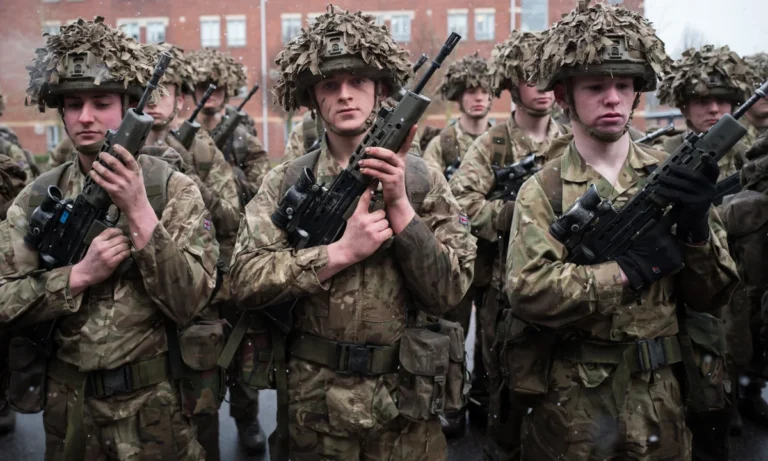
WW3 Conscription in the UK: The Shocking Consequences of Saying No
Back in World War I, giving a man a white feather was a powerful act of public shaming, meant to label him a coward for not joining the fight.
It’s starting to feel like we’re edging dangerously close to another global conflict — and the idea of mandatory conscription, particularly for young men, no longer feels far-fetched.
Those known as “conscientious objectors” had declined to fight for Britain in the 1914–1918 war against Germany, often because of moral or religious beliefs. In response, The White Feather Campaign was launched by women who would hand white feathers to men not in uniform, a public symbol meant to shame them as cowards.
The idea of World War III is, of course, one no one wants to imagine, yet with Vladimir Putin’s ongoing aggression in Ukraine and his allies making increasingly terrifying threats, including hints that UK university cities could become targets, the tension feels more real than ever.
Over the summer, ministers warned that the UK must be ready for “war in our homeland,” urging a stronger national focus on preparing for potential conflict, along with other major crises like pandemics, severe weather, cyberattacks, and infrastructure failures.
While it’s impossible to know exactly how conscription would play out today, history gives us some clues, particularly from the last major global conflict, World War II.
Conscientious objectors had to appear before tribunals to justify why they refused military service. If the court accepted their reasoning, they were granted exemptions and assigned alternative, non-combat duties to support the war effort.
According to the UK Parliament website: “Conscientious objectors had to appear before a tribunal to argue their reasons for refusing to join-up. If their cases were not dismissed, they were granted one of several categories of exemption, and were given non-combatant jobs.”
To this day, European courts uphold the rights of conscientious objectors.
A March 2025 UK Government report on conscription outlines how national service currently operates in other European countries.
It states: “Most countries obligate men to serve, offering opportunities for women to volunteer if they wish. Many also offer an alternative civilian option for conscientious objectors. Some use a lottery model, meaning that only a small proportion of eligible men are required to serve.”
“The European Parliament’s research service briefing on mandatory military service says all EU Member States with an active conscription system have recognised the rights of conscientious objectors through national law.”
For example, in Finland, men must serve by law, but those who are conscientious objectors can complete alternative, non-military service.
In Greece, the system is similar, with minimum service requirements: “Less than 12 months military or 15 months civilian service for conscientious objectors.”
Of course, even if you were allowed to take on a non-combat role should WW3 erupt, it wouldn’t prevent people from waving a white feather at you in public.
According to the Peace Museum at the University of St Andrews: “The women of the ‘White Feather Campaign’ were militant in more ways than one: with passive aggression, they tried to shame men into signing up and fighting in the war, believing that military involvement was necessary and right.
“The symbol they used took some well-known peace imagery – the classic white dove – and twisted it to fit their public campaign. It is important to remember that, in their militarism, many of these women felt that they were ultimately working towards global peace: joining the ‘war effort’ was the best way, in their view, to bring the First World War to an end.
“Their views stood in stark contrast to the moral pacifism of conscientious objectors, who argued against violence as a means of solving conflict.”