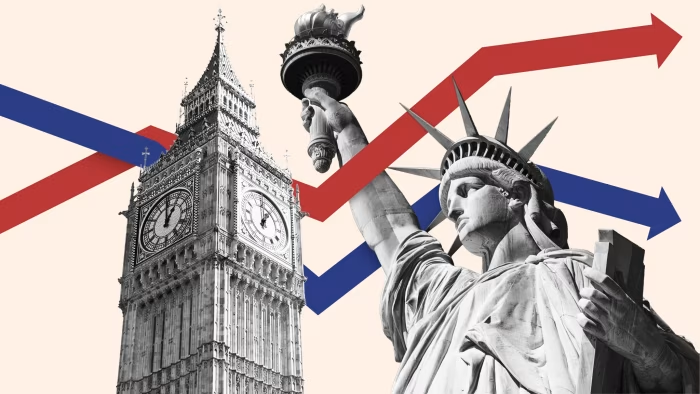
UK Gov’s New Proposals on Immigration are Echoing Radical Trump Policies
The UK government’s newly unveiled immigration proposals have prompted sharp debate — with critics warning they amount to one of the most radical overhauls of asylum and migration law seen in decades. Some observers now draw a direct comparison to the tough-tackle policies associated with Trump, arguing that the UK is veering toward a similarly uncompromising approach.
Under plans introduced in 2025, the UK aims to sharply restrict who is allowed to come, remain and settle — across work visas, asylum claims, family reunification and refugee protections. The reforms prioritise domestic labour first, raise skill thresholds for work visas, limit social support and residency eligibility for many asylum-seekers, and introduce stricter removal rules for those arriving via unauthorised routes. (GOV.UK)
With these changes, the system intends to reduce net migration dramatically — reversing the recent surge driven by demand for overseas labour, and addressing public concern about immigration levels and strain on public services. (GOV.UK)
What the New Rules Would Change — And Who They Target
Under the reforms:
- Work visas would only be granted for applicants meeting high skill and salary thresholds (essentially “graduate-level” roles), rather than a broader spectrum of lower-skilled or shortage-occupation positions. (GOV.UK)
- Employers seeking foreign workers for lower-skilled roles would need to demonstrate clear labour-market shortages and commit to training domestic staff — shifting the default from “import labour” to “use local workforce.” (GOV.UK)
- Asylum seekers and refugees would receive far less certainty over long-term stay or permanent residence. The new system moves toward time-limited protection rather than automatic routes to settlement — with residency and right to settlement significantly curtailed for many. (Wikipedia)
- Family reunification, access to welfare support, and pathways to permanent settlement would face tighter restrictions, potentially leaving many asylum-seekers in a prolonged, uncertain limbo. (Wikipedia)
Supporters of the plan argue this represents “taking back control” — reducing pressures on housing, public services, wages and social cohesion. They frame it as a necessary correction to years in which surging migration strains public infrastructure and contributes to inequality. (GOV.UK)
Why Critics Say This Mirrors Trump-Style “Zero-Tolerance” Approaches
Some political commentators and migrant-rights advocates warn the reforms tread a dangerous line. By curtailing asylum rights, sharply limiting residency, raising barriers to work, and restricting family reunification, the UK would effectively be creating a two-tier population: well-protected high-skilled migrants and a large group with minimal rights, deep uncertainty and limited social mobility.
This echoes many of the hard-line immigration measures championed by Trump in the US — policies that focused on steep restrictions, tougher deportation rules, and reductions in refugee and asylum protections. For many, the proposed British laws represent a similar philosophy: migration only for those “worthy” by skill or work, with little tolerance for irregular migration or humanitarian flows.
It’s a shift not only in policy—but in national identity and the UK’s long-standing tradition of offering refuge and safe haven. As research indicates, public and parliamentary discourse has increasingly moved away from integration-oriented narratives toward securitised, border-focused immigration rhetoric. (arXiv)
What It Means for Migrants, Refugees — and British Society
If implemented as planned, the reforms could bring a sweeping change for migrants and asylum-seekers: fewer opportunities, a tougher path to settlement, and greater uncertainty over long-term status. For many, the UK would become far less welcoming.
Some potential impacts:
- Asylum seekers may face long waiting times, restricted rights, and limited access to benefits — even if they qualify for temporary protection.
- Lower-skilled foreign workers who fill roles in sectors like agriculture, hospitality, social care or manual labour may find it harder to get visas, at least legally, pushing employers to rely more on domestic recruitment.
- Families hoping to reunite — including parents and children separated by migration — may face stricter rules or denial.
- Integration, community cohesion and social mobility for refugees and migrants may suffer, as legal and social pathways shrink.
Supporters argue these outcomes are necessary for fairness to British workers, public services and to ensure long-term social stability. Critics counter that this reduces human rights, shuts out vulnerable people fleeing danger, and undermines the UK’s moral standing as a tolerant society.
The Bigger Picture — Trend Toward Hardline Immigration in Europe and Beyond
The UK’s new policy doesn’t stand alone. Across Europe, rising economic pressures, social strain and political shifts are pushing several countries toward tougher immigration, asylum and citizenship laws. In this context, Britain’s reforms mark a significant step — potentially setting a precedent for future policymaking in Western democracies.
The shift also reflects a broader transformation in immigration politics — from openness and multiculturalism toward control, restriction and prioritisation of national interest over humanitarian commitments.
Whether this amounts to a long-term policy reset or a temporary response to political pressure and economic conditions remains uncertain. But what’s clear is: the debate on who belongs in Britain — and on what terms — has entered a new, far-more contested phase.
Conclusion: A Crossroads for the UK — Between Control and Compassion
The UK’s proposed immigration reforms may well deliver on government promises to reduce migration, ease pressure on housing and public services, and protect British labour markets. But they also risk reshaping the country’s identity, weakening asylum safeguards and restricting social mobility for newcomers.
By echoing Trump-era policies in vigour and scope, they raise fundamental questions about national values, fairness and the UK’s role as a refuge. As debate intensifies, what emerges may define Britain for decades — as either a hard-border state or a society balancing control with compassion.