Failed Missile Launch Sends Purple Smoke over Russia Humiliating Putin
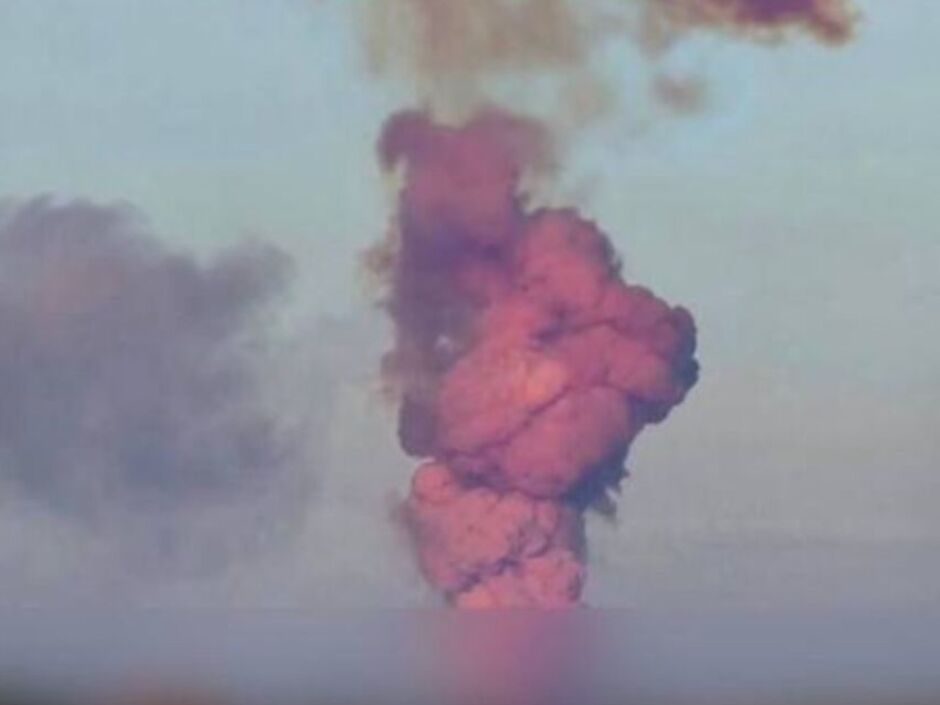
A missile test at a military launch site near Yasny test site, in Russia’s Orenburg region, appears to have ended in disaster after the rocket exploded soon after launch — resulting in a dramatic plume of purple smoke visible for miles.
According to local reports, the rocket rose only briefly before veering off-course and detonating in mid-air, raining debris and producing a dense, toxic-looking purple cloud. Witnesses say they heard a loud blast. Regional authorities reported no immediate risk to the public but offered few details, and residents were not asked to evacuate.
No formal confirmation has been issued by Russian officials, but open-source analysts and Ukrainian defence outlets believe the failed launch involved either the newer RS-28 Sarmat intercontinental ballistic missile (ICBM) — Moscow’s much-touted “next generation” strategic weapon — or a legacy system equipped with a hypersonic warhead.
Why the Purple Smoke — and What It Means
Experts familiar with Russia’s missile programmes point out that the purple smoke likely stems from a hypergolic or otherwise highly toxic liquid fuel used in first-stage rockets. Similar “coloured-cloud” explosions have accompanied previous launch failures.
Because of these dangerous fuels, a failure like this isn’t just a technical mishap — it may produce chemical or environmental danger, especially in a populated region. Even if authorities claim there is “no threat,” such an event raises serious safety concerns, both to local residents and to long-term environmental health.
Moreover, if the missile was indeed an RS-28 Sarmat (or a related ICBM), the failure would deal a blow to what Russia presents externally as a modern, reliable nuclear-deterrent system. The Sarmat has already suffered multiple test setbacks, including previous catastrophic failures that destroyed launchpads.
Strategic and Psychological Implications for Russia
For Moscow, the incident is more than embarrassing — it undermines confidence in its strategic arsenal at a time when Russia repeatedly threatens western countries with nuclear escalation. A failed test of a nuclear-capable missile suggests that Russia’s ability to guarantee its own nuclear deterrence may be shaky.
Internally, such accidents risk damaging morale within Russia’s military and strategic forces. They also expose the logistical and technical difficulties of maintaining advanced weapons under wartime pressure, especially given international sanctions and supply constraints that may affect components and maintenance.
Internationally, the failure may offer an indirect advantage to Ukraine and its allies. Every high-profile mishap erodes the credibility of Russia’s nuclear posture and emphasises the risks of relying on high-tech, advanced weapons systems — reinforcing Western arguments for deterrence, defence, and containment.
What Happens Next — What to Watch
Given the secrecy surrounding Russia’s strategic weapons testing, many crucial questions remain open: Was this a full-blown ICBM test or a smaller missile system? Were any nuclear-capable warheads aboard — and if so, were they damaged or destroyed in the explosion? Will Russia pause further launches until it investigates the failure?
Observers will also watch for signs of environmental or public-health consequences — especially given the toxic fuel signature and purple-smoke plume. Satellite imagery, air-quality data, and independent journalism may together reveal whether radiation or chemical contamination occurred.
Finally, the political fallout may extend beyond Russia’s borders. Western governments, already wary of Russian nuclear threats, may seize on the failure as evidence of instability — reinforcing calls for tighter controls, deterrence measures, and continued support for Ukraine.
Conclusion: A Risky Gamble That Backfired
What was likely meant to be a demonstration of power now looks like a stark illustration of danger — both for those at the Yasny site and for the credibility of Russia’s strategic arsenal. The explosive failure of a missile test, the purple plume overhead, and the rushed denials that follow — all paint a picture of a weapon system under stress, vulnerable at its very roots.
In a war increasingly defined by high-stakes posturing and nuclear threats, this may be one of the most telling signals yet: the danger lies not just in how much firepower Russia can muster — but in how reliably it can keep it under control.
- Can You Manifest While Sleeping? A Practical Law of Attraction Guide
- Can You Manifest at Any Time? How to Align With Your Desire Whenever You Choose
- Can You Manifest Something Impossible? A Practical Law of Attraction Guide
- Can You Manifest the Same Thing Twice? How to Align Without Doubt
- Can You Cancel a Manifestation? How to Redirect Your Energy with Confidence