The Eerie History Behind What You Celebrate
October always brings a vibe that is absolutely infectious. Every year we pick the perfect pumpkin to carve, dress up in costumes and decorate our homes with cobwebs and skeletons. Yet, few of us stop to wonder why. Halloween feels like harmless fun, but its roots are much darker than most realise. Before trick-or-treating was a thing, it was a night of wandering spirits and fears of the dead returning to walk with the living. The holiday we know as Halloween was crafted by centuries of superstition, symbolism and terrifying tradition. It’s time to grab your flashlight and your favourite sweet because we’re unmasking Halloween and its eerie history behind the night we all love to celebrate.
From Samhain to Halloween – Where It All Began
Before the nights of dressing up and trick-or-treating, there was Samhain – a Celtic festival. It marked the end of the harvest and the beginning of Winter. It was celebrated the night of October 31 into November 1.
During Samhain, people believed that the veil between the living and spirit world was the thinnest. This meant that spirits could pass through sometimes delivering messages, being funny or even mischievous.
People dressed up in costumes to disguise themselves from harmful spirits, set extra places at their dinner table to welcome family members who had passed on and lit huge bonfires to protect themselves from roaming spirits. They offered food and drink to the Gods and the dead to ensure a safe winter. It was a night about remembrance and respect of the spirits.
When Christianity Entered the Story
During the 8th century Pope Gregory III declared November 1 as All Saints’ Day, also known as All Hallows’ Day. It was a time meant to honour saints and martyrs. Over time, the night before November 1 became known as All Hallow’s Eve, shortened to “Halloween”.
During this time pagan and Christian traditions began to intertwine more. The bonfires of Samhain were a part of All Hallows’ celebrations. It was framed as a way to light the darkness and ward off evil. People still used costumes, but rather than for disguise, they dressed as angels, devils and saints.
The practice of leaving food out for visiting spirits morphed into “soul cakes”, which were small offerings to the poor or children who went door to door “souling”, praying for the dead. This is the first known occurrence of what we now know as “trick or treating”.
Over time, these festivities started to blur the lines of what was sacred and what was spooky, where life ended and death started and light and dark. What started as a Celtic ritual to mark the changing of the seasons became Christian-infused and slowly morphed into the Halloween we know today.
The Birth of Trick-or-Treating
So, when did trick-or-treating as we know it now become a thing? It started as part charity, part superstition and rooted in honouring the dead. The first “trick or treating” was, as we explained above, “souling”. After this, evolved “guising”. Guising was a Scottish and Irish flair on the tradition.
Children dressed in costumes and went door to door performing songs, jokes and skits in exchange for treats like fruit, nuts or coins. When Irish and Scottish immigrants moved to America, they brought this custom with them and it continued to evolve. By the 20th century, trick-or-treating was a family-friendly celebration and by the 1950s, it had become a Halloween staple.
What About The Pumpkins?
Pumpkins are an iconic symbol of Halloween but have you ever wondered why? How did a gigantic fruit become related to a spooky holiday? The tradition is rooted in Irish folklore – specifically the scary story of Stingy Jack.
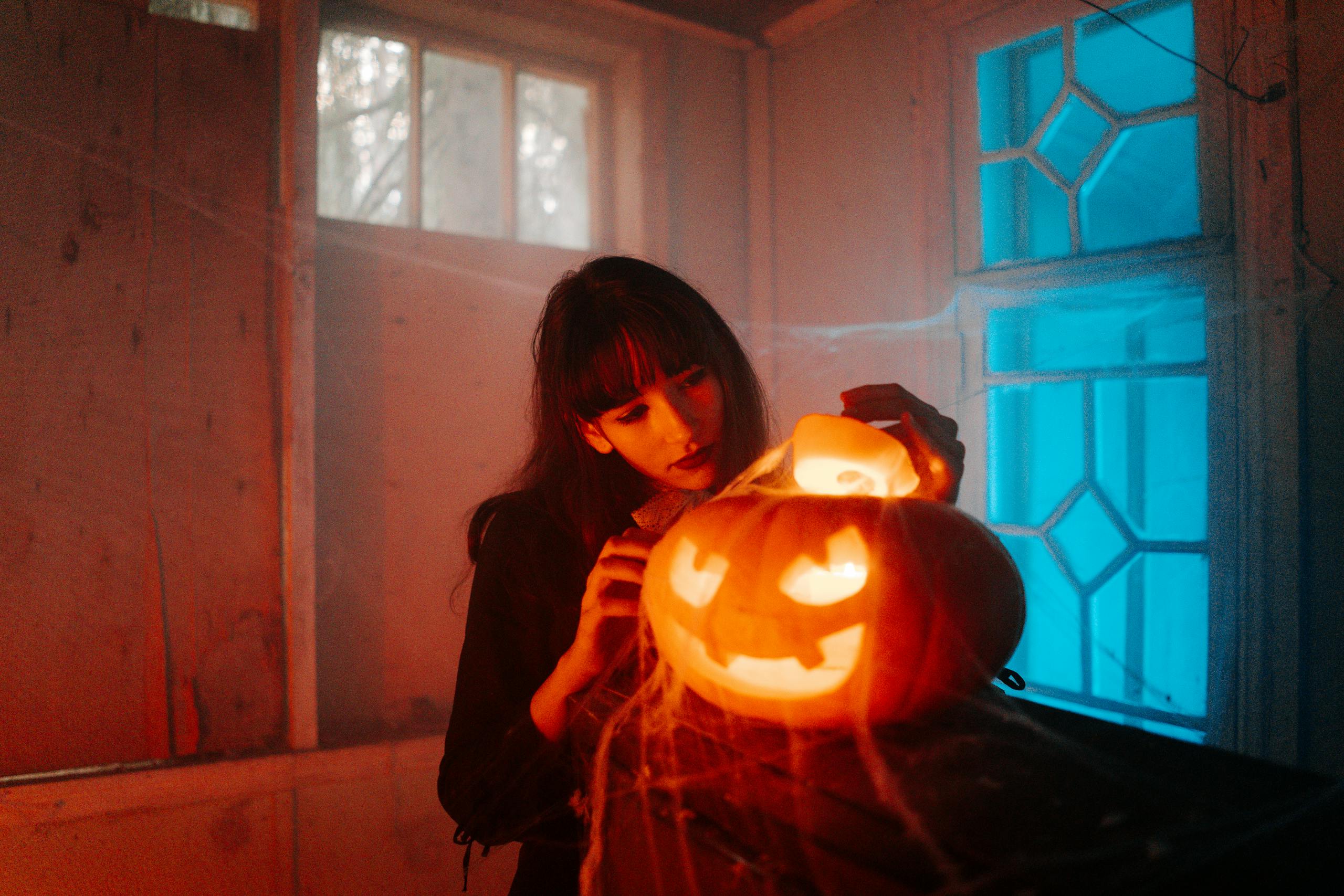
Stingy Jack was a clever but deceitful man who had tricked the devil one too many times. As a punishment Jack had to wander the earth forever with only the light from a burning coal placed inside a hollowed-out turnip. The Irish started carving scary faces into turnips and putting candles inside them to ward off spirits like him. When Irish immigrants brought the tradition to America, they discovered that pumpkins were easier to carve, and thus, the tradition transformed and jack-o’-lanterns were born.
Witches, Ghosts, and Monsters: Halloween’s Iconic Symbols
Halloween’s other iconic symbols each have their own stories of where they came from. They’re all tied to Halloween through old folklore and a fear of the supernatural. Modern-day Halloween took the fear and turned it into festive fun with witches, ghosts, monsters, and jack-o’-lanterns offering a playful and inviting balance between light and dark or alive and dead.
How America Made Halloween Big
We can thank the Irish and Scottish immigrants that came to North America for the modern Halloween phenomenon. When they arrived, they unknowingly planted the seeds of what we now know as Halloween. Over time it evolved into a community-centred celebration, with towns hosting parades, parties and events to make it even more family-friendly.
What Modern Halloween Looks Like
Nowadays Halloween is a major holiday. Stores stock up on treats and people spend months putting together the absolute perfect costume. Halloween has turned into a whirlwind of costumes, candy and gruesome movies, haunted houses and so many ghost stories.
It took spiritual superstition and morphed into a form of entertainment. Halloween is a creative outlet for so many. It’s a time where you can express yourself without fear of judgement. And, there’s something so satisfying about the thrill of being scared too. Halloween allows you to gently flirt with fear, laugh in the face of complete darkness and remember that the eerie origins of the holiday still lurk.
The Spirit of Halloween Lives On
What started as a festival to allow spirits to cross over easily and morphed into children going door to door putting on shows in order to receive a treat has now catapulted into a completely other world. The spirit of Halloween lives on through each person who celebrates. It unifies. Halloween is something that brings people together.
Whether through costume contests, trick-or-treating or scary stories, it’s this sort of spooky fantasy land where we’re all accepted. So the next time you’re reading a little ghost story this Halloween or going out trick-or-treating, remember all the traditions that came before you, and be mindful of how you honour them in how you acknowledge the holiday.