Satellite Images Reveal Sharp Escalation in Russia’s Crisis — What’s Really Going On?
Newly analysed satellite imagery has flagged a significant escalation in Russia’s ongoing crisis — one that goes beyond the battlefield and spreads across the economy, military posture and infrastructure. The images highlight a Russia under pressure, acting with urgency, and possibly scrambling to manage multiple threats at once. For the outside world, the question now is: what will Moscow do next, and how far is it willing to go?
What the Images Show
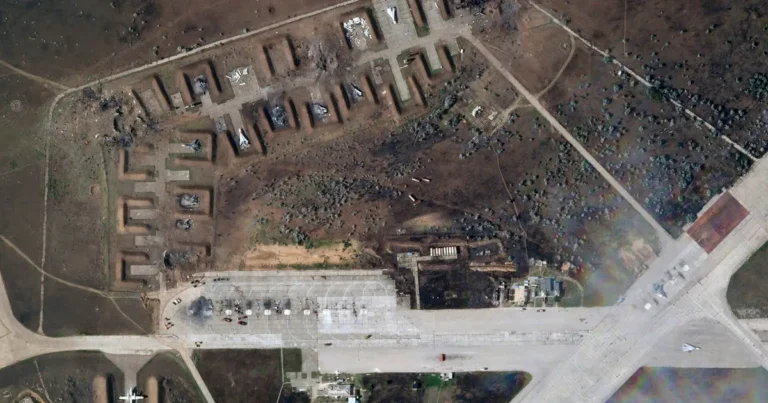
The satellite data reveals multiple worrying trends. First, there’s clear evidence of heightened military activity: large concentrations of heavy equipment being moved, expanded storage depots, and vehicles being redeployed closer to Ukraine’s border and maritime zones. Analysts interpret this as Russia preparing for either a renewed offensive or of bolstering defence in anticipation of one.
Second, signs of infrastructure strain are visible. Imagery shows production facilities, logistics hubs and transport corridors under pressure — smoke plumes, increased nighttime lighting in some regions (indicating higher activity) and what appear to be emergency repair operations. These visuals suggest the war-time economy is stretching, and Moscow may be shifting resources in response.
Third, civilian and storage areas show odd patterns: what looks like hurried repairs or relocations, vehicle displacement in non-military zones and patterns that hint at internal displacement of resources rather than orderly expansion. Taken together, the pictures suggest not only external menace but internal instability.
Why It Matters
This escalation matters for multiple reasons. Firstly, if Russia is ramping up military posture, Ukraine and its allies must brace for further operations, renewed offensives or strategy shifts that could destabilise the region again. Secondly, visible economic stress — especially in infrastructure and logistics — hints at a façade of Russian strength that may be cracking; the satellite signs of strain may mirror internal pressures of sanctions, war-costs and inefficiencies. Thirdly, the world must take seriously that what many hoped was a contained conflict might now be entering a more unpredictable chapter, where escalation could spill across borders, supply chains or even global commodity markets.
For Western partners, these images mean they may need to accelerate diplomatic, economic and military preparatory steps. For Russia’s neighbours, the visual escalation is a red flag — more than words or statements, satellites don’t lie.
What Could Happen Next
Given the evidence, several possible scenarios now come into greater focus. Russia might launch a new operational push against Ukraine — not necessarily a full invasion, but targeted strikes, diversionary operations or feint attacks to force Ukraine into deeper defensive posture. Alternatively, Moscow may be preparing for attritional conflict, shoring up supply lines, moving equipment and trying to brace for a protracted war.
On the economic front, the infrastructure strain suggests Russia may face breakdowns in supply, logistics or military production — which could prompt more reckless use of resources or escalation to secure assets. In diplomacy, Moscow might exploit this moment to demand concessions—offering to de-escalate in exchange for relief from sanctions or security guarantees.
Final Thought
Satellite imagery has provided a rare, high-precision window into a Russia that is not merely fighting abroad, but fighting internally — against logistics, economy, infrastructure and time. The escalation visible from space is a signal that the conflict is evolving and that the current status quo may be shifting.
For the world watching, the message is clear: the crisis in Russia is no longer stable. The visuals point to urgency, strain and manoeuvring. Whether this leads to wider war, deeper economic collapse or prolonged stalemate depends on how Moscow chooses to act — and how the rest of the world responds.