Russia’s Military Strain: What’s Behind the Growing Collapse
Recent analysis of Russia’s military performance and industrial capacity suggests that what many once described as a formidable war machine is increasingly buckling under pressure. A combination of supply-chain breakdowns, heavy battlefield losses and economic stress is reportedly crippling Russia’s ability to sustain large-scale military operations. (United24 Media)
Supply Chains Crumbling — Defence Industry Imploding
One of the most revealing signs of trouble lies not on the battlefield, but in the factories and production lines that feed it. Russia’s defence-industrial sector — including major arms manufacturers and tank producers — is reportedly experiencing its “most severe crisis since the collapse of the Soviet Union.” (United24 Media)
Firms that once churned out tanks, artillery, drones, and other military equipment are now grappling with workforce shortages, mounting debts, and delayed or unpaid contracts. (United24 Media) In some cases, essential components such as thermal imaging systems, electronics, or microelectronics — formerly imported or supplied through global supply chains — are now unavailable or prohibitively expensive due to sanctions. (United24 Media)
Because of these constraints, reportedly even large factories have had to cut jobs and scale back production, undermining Russia’s ability to replenish losses, equip new recruits properly, or maintain readiness for intense combat. (United24 Media)
Battlefield Failures, Heavy Casualties, and Limited Gains
On the frontline, the cost of these industrial problems is becoming painfully clear. As of late 2025, data from independent military analysts show that the Russian military has failed to make meaningful progress over large stretches of the front. Advances are slow, inefficient, and met with stiff resistance. (CSIS)
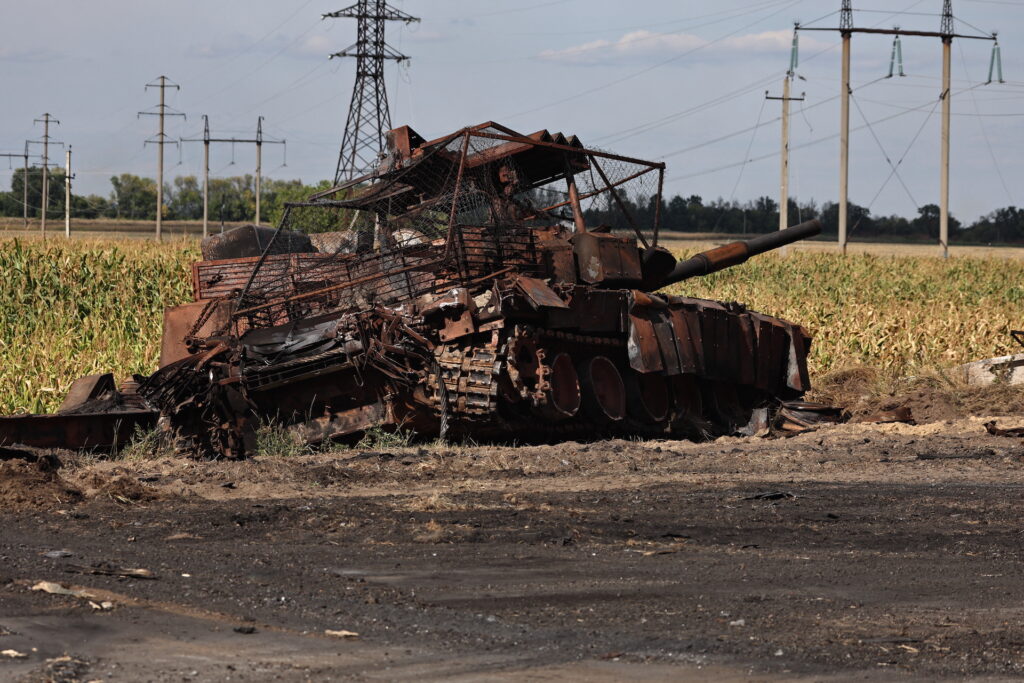
For decades, Russia benefited from a legacy of overwhelming manpower and matériel. However, in the current war, heavy losses in personnel and equipment — including tanks, armoured vehicles, artillery and support hardware — have started to outpace what Russia can realistically replace. (CSIS)
One analysis estimates that Russia could reach a cumulative casualty mark near one million — a staggering number by any standard. (CSIS) Meanwhile, territory gained since 2024 has been minimal compared to the resources expelled. (CSIS)
Hidden Cracks, Public Silence — What Russia Is Trying to Hide
Despite the mounting evidence of breakdown, official Russian media and state communications continue to portray the war effort as going on unquestioned. This contrast between reality and propaganda is increasingly stark. Many defence-industry failures, supply shortages, and factory shutdowns are being hidden from public view. (United24 Media)
Internally, companies have reportedly struggled to fulfil contracts, yet continue to record losses and mounting debts — sometimes for years, with payments from the state delayed indefinitely. (United24 Media) That suggests the problems are not temporary glitches, but structural — revealing a war economy under severe strain.
As one defence blog put it: Russia is trying to fight a modern war with a fractured industrial base, obsolete supply chains and a shrinking pool of skilled labour. (United24 Media)
What This Means for the War — And for Europe’s Security
A War of Attrition Russia May Be Losing
Taken together, the evidence suggests that Russia’s war machine is no longer a sustainable juggernaut. Without the ability to manufacture, maintain, and supply equipment — especially heavy armour, drones, artillery and ammunition — its advantage has eroded.
This shift has significant implications for the trajectory of the war. Prolonged conflict under these conditions increases the likelihood that Russia will turn to more desperate, asymmetric tactics — sabotages, drone raids, cyber-attacks, or reliance on proxy forces — rather than conventional territorial advances.
Increased Pressure on Allies to Sustain Support for Ukraine
For Ukraine and its Western backers, Russia’s weakening military-industrial capacity underscores the importance of continued aid — especially supply of ammunition, advanced air defence, and logistical support. It also means that sustained pressure may yield strategic dividends over time, as Russian capability to replenish losses diminishes.
At the same time, however, the risk remains that Moscow — desperate and cornered — might escalate elsewhere, increase sabotage or target civilian infrastructure, or adopt dangerous, unpredictable responses.
Long-Term Fragility — Russia’s Economy and Defence Undermined
The collapse of Russia’s defence-industrial base threatens not just immediate war efforts, but the long-term stability of its military. Centred around dated infrastructure, weak supply chains, and heavy dependence on imports, Russia’s war economy may not recover — especially under continuing sanctions. (Jamestown Foundation)
This could leave the Russian armed forces hollowed out, unable to project long-range power, and vulnerable to future crisis — whether internal or external.
Conclusion — The Illusion of Strength Is Fading
What once looked like an unstoppable war machine is now revealing deep structural cracks. Battles lost, equipment destroyed, factories idle, supply lines broken — taken together, they paint a portrait of a military under severe strain, and a defence-industrial backbone in collapse.
Moscow may try to suppress the narrative and shield its population from the full truth. But the signs are visible: a war effort increasingly driven by desperation, attrition, and diminishing returns.
If Russia cannot rebuild its manufacturing capacity, replenish its losses, or modernise its defence-industry infrastructure, the “war machine” many feared may soon be nothing more than a ghost of its former strength.
- Can You Manifest the Same Thing Twice? How to Align Without Doubt
- Can You Cancel a Manifestation? How to Redirect Your Energy with Confidence
- Can You Change Your Manifestation? How to Redirect Your Desire with Confidence
- Do You Have to Forget About Your Manifestation? The Truth About Letting Go
- Do You Have to Believe in Manifestation for It to Work?