7 British Foods That Make The Rest Of The World Say: “You ACTUALLY Eat That?”
If there’s one thing Brits are oddly proud of, it’s their unique ability to serve dishes that leave the rest of the world staring, shocked. British cuisine has a charismatic habit of confusing visitors. Whether it’s because of the ingredient list, its name or its beige-bland appearance, there are multiple British foods that continue to spark questions from shocked visitors asking questions like “you actually eat that?” Here are seven British foods that are culinary treasures across the UK but continue to baffle the rest of the world.
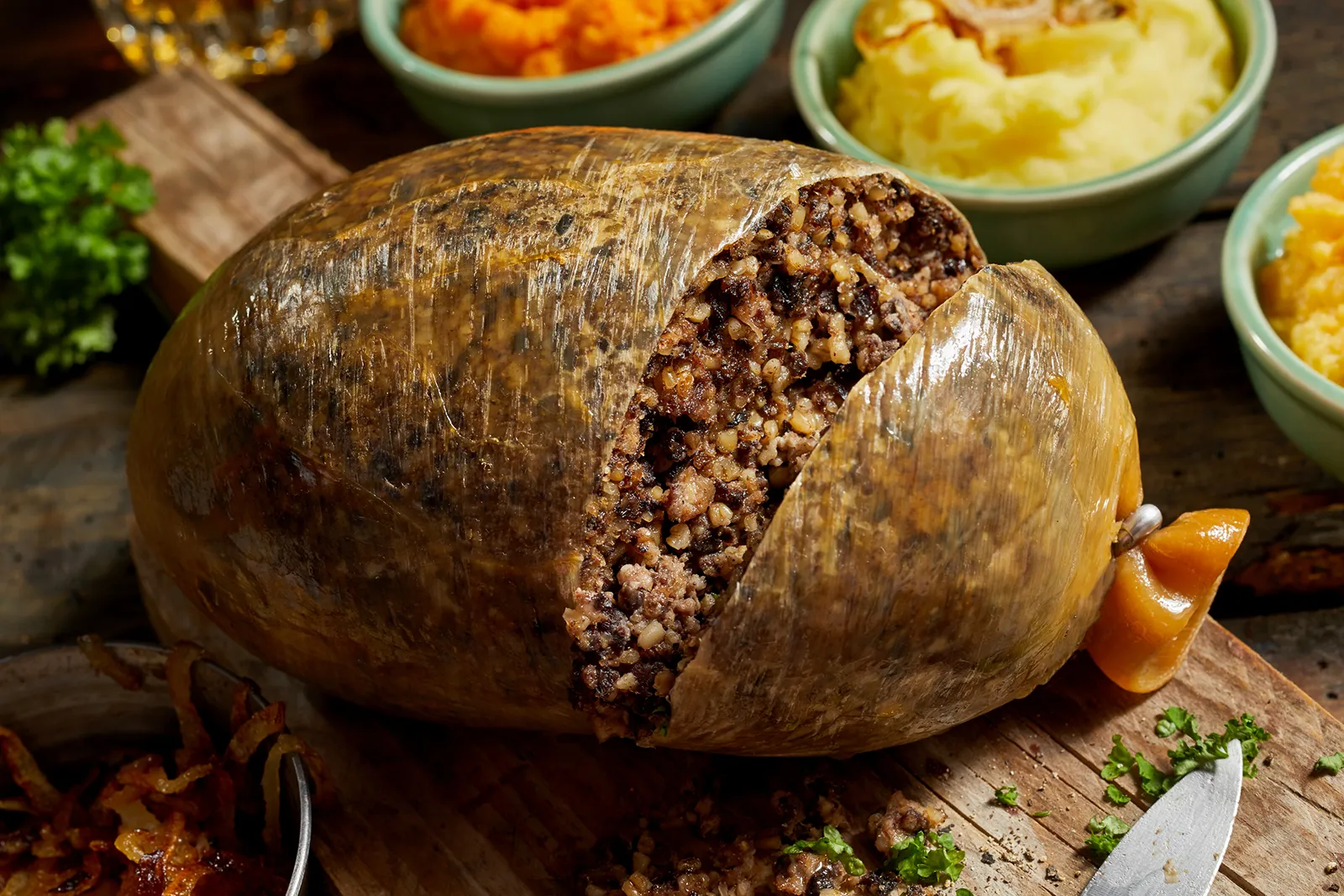
1. Haggis
One of the most British and absolutely confusing foods to others is haggis. Haggis is a savoury Scottish dish made from sheep’s heart, liver and lungs minced with onion, oatmeal, suet and spices. It’s both infamous and iconic. Today the haggis in supermarkets and restaurants can be made from lamb, beef, pork or venison and usually, the stomach has been replaced with artificial casings. The taste and texture of haggis can take some getting used to, but Brits obsess over the crumbly sausage-like texture. One of the earliest references to haggis appeared in a 13th-century poem by english knight Walter of Bibbesworth.
What is in Haggis?
- Heart, lung and liver of lamb
- Beef or lamb mince or trimmings
- Onion
- Oatmeal
- Suet
- Salt
- Black pepper
- Nutmeg
- Coriander
2. Black Pudding
Black pudding is a type of blood sausage made from pork or beef blood, fat, and a cereal filler like oatmeal or barley. It is incredibly high in iron and protein, making it a super-meal for many. While some visitors shriek in sheer horror when they see it, others are delighted to have a few slices of the spicy sausage. It has a unique taste and is incomparable to any other sausage. It’s salty and can be spicy, depending on how it’s made. Black pudding is a staple in the full english breakfast and has been enjoyed among Brits for centuries. But the rest of the world isn’t jumping on the bandwagon just yet. They’re forced to overcome the psychological barrier that they’re eating blood that came from an animal. It looks unappealing to some and its strong flavour is off putting for many.
Black Pudding Ingredients
- Pork blood
- Pork fat or suet
- Oats or barley
- Onions
- Seasonings
3. Jelly Eels
Another food that confuses the world but still remains popular and adored across the UK is the jellied eel. Jellied eels are a traditional British dish made from chopped eels cooked in a spiced broth. Then, the eels set into a jelly when they cool. Jellied eels have an irresistibly strange texture and are most often served cold. They originated in the 18th century in the East End of London. During this time the Thames River was full of eels, making them a cheap and plentiful food source. Brits tend to love the jelly factor of this meal, the savoury but gently sweet taste and its unique texture. The rest of the world, though? They’re not on the same page. They find it odd, too fishy and weird to eat fish cold.
4. Spotted Richard
Spotted richard is a British steamed pudding made with suet and dried fruits, typically served with custard. While the name is a little mysterious, the dish remains a beloved iconic British dish. It is made with caster sugar, dried currants and shredded suet. The moist, steamed pudding is very easy to make and offers comforting and nostalgic vibes. It’s sweet, simple and satisfying, all while being unapologetically British. But those who aren’t as familiar with the dish are turned off for reasons like its name, heavy texture and greasy, thick and moist feeling.
5. Pork Pies
If there’s one British menu item that really confuses the world, it’s pork pies. Pork pies are a traditional British savoury meat pie made with seasoned minced pork in a hot water crust pastry. They can be made individual-sized, making them perfect for picnics, potlucks or lunches as well as large-sized. Pork pies are savoury and beloved by Brits. But as for the rest of the world? They’re not as on board with eating cold meat in a pastry as the British.
6. Stargazy Pie
Stargazy pie is a Cornish dish made of baked pilchards, eggs and potatoes. The defining features of this dish are the fish heads sticking up through the pie crust, making it look as if they’re looking at the stars. Stargazy pie always draws a reaction from those unfamiliar, from shock and surprise to disgust. But Brits are holding onto it tightly! There’s just something invigorating about the fishiness mixed with the smokiness from the bacon and the rich buttery pastry.
7. Mushy Peas
Mushy peas are a traditional side dish enjoyed regularly throughout the UK. They’re most commonly served alongside fish and chips. Mushy peas are made from marrowfat peas, boiled and mashed until creamy. The texture is thick and soft and offers a sweet flavour. But what some people find delicious, others are reminded of baby food and aren’t wanting to dive in.
Things to Remember About Surprising British Foods
- Names of dishes can be misleading. It might sound silly when you say it but keep an open mind! You might be surprised by what you discover.
- Many odd-looking dishes have deep cultural and historical significance. They’re really important to the British.
- Outsiders are often weirded out about the textures of British foods, but if you can get past the texture, they might be your new favourite foods.
Conclusion
In the end, these seven British foods certainly leave the world in a strange state of confusion more often than not. Whether it’s their name, what’s inside of them, or just how they look on your plate, they often confuse and sometimes even mortify the rest of the world. It’s a gentle reminder to not judge things by what they look or sound like because they very well could be absolutely fantastic!
- Can You Manifest the Same Thing Twice? How to Align Without Doubt
- Can You Cancel a Manifestation? How to Redirect Your Energy with Confidence
- Can You Change Your Manifestation? How to Redirect Your Desire with Confidence
- Do You Have to Forget About Your Manifestation? The Truth About Letting Go
- Do You Have to Believe in Manifestation for It to Work?