Russia Lists 23 UK Targets – Here’s Where You Might Be Out of Harm’s Way
Vladimir Putin’s aggression in Eastern Europe is intensifying worries of a wider NATO conflict. The Russian President, who launched unprovoked military aggression towards Ukraine in 2022, has been testing the West’s response to airspace incursions. The Institute for the Study of War (ISW) warned on Saturday: “Russia continues to challenge and probe NATO states’ capabilities, possibly as part of preparations for a potential future Russia-NATO war.” Adding to the alarm, a senior Russian minister hinted in September that “the most terrible weapons” could erupt on the UK.
Sergei Karaganov, 73, the honorary chairman of the Russian Council for Foreign and Defence Policy, told viewers on television: “This European contagion must be eradicated. We need to prepare to strike, or at least make them understand that we are ready. It won’t necessarily be a nuclear strike… but we must prepare.” The rhetoric amplified when propagandist Vladimir Solovyov proposed targeting Britain’s elite, even suggesting that Oxford and Cambridge could be destroyed so the British establishment would be demolished.
Solovyov — joined by Senator Dmitry Rogozin — even released a chilling map naming 23 potential bombing targets.
In December, the House of Commons Library reported, “Russia has the largest nuclear arsenal in the world, with a stockpile estimated at 5,580 warheads, of which 4,380 are operational (strategic, non-strategic and reserve).”
“Russia’s large arsenal of 1,558 non-strategic/tactical warheads are not currently subject to any arms control limitations.”
They also noted that Russia’s new nuclear doctrine officially extends the country’s nuclear umbrella to include Belarus.
Experts noted: “In changes to previous doctrine, the use of nuclear weapons would be justified against conventional aggression that poses a critical threat to Russian/Belarusian sovereignty and/or territorial integrity, as opposed to the very “existence of the state.”
“An aggression against Russia by any non-nuclear state with the participation, or support, of a nuclear state would also be regarded as a joint attack on the Russian Federation.”
Earlier this week, UK Space Command Head Major General Paul Tedman cautioned that Russia is developing the ability to deploy nuclear weapons in space.
Regarding the potential reach of nuclear blasts, crucial factors must be taken into account, including a radiation radius of 153 km² and a fireball radius of around 197 km², the Mirror reports.
Additionally, there is an air blast radius ranging from 321 km² to 1,420 km², along with a thermal radiation radius of 12,960 km².
These distances can vary and depend on weather conditions.
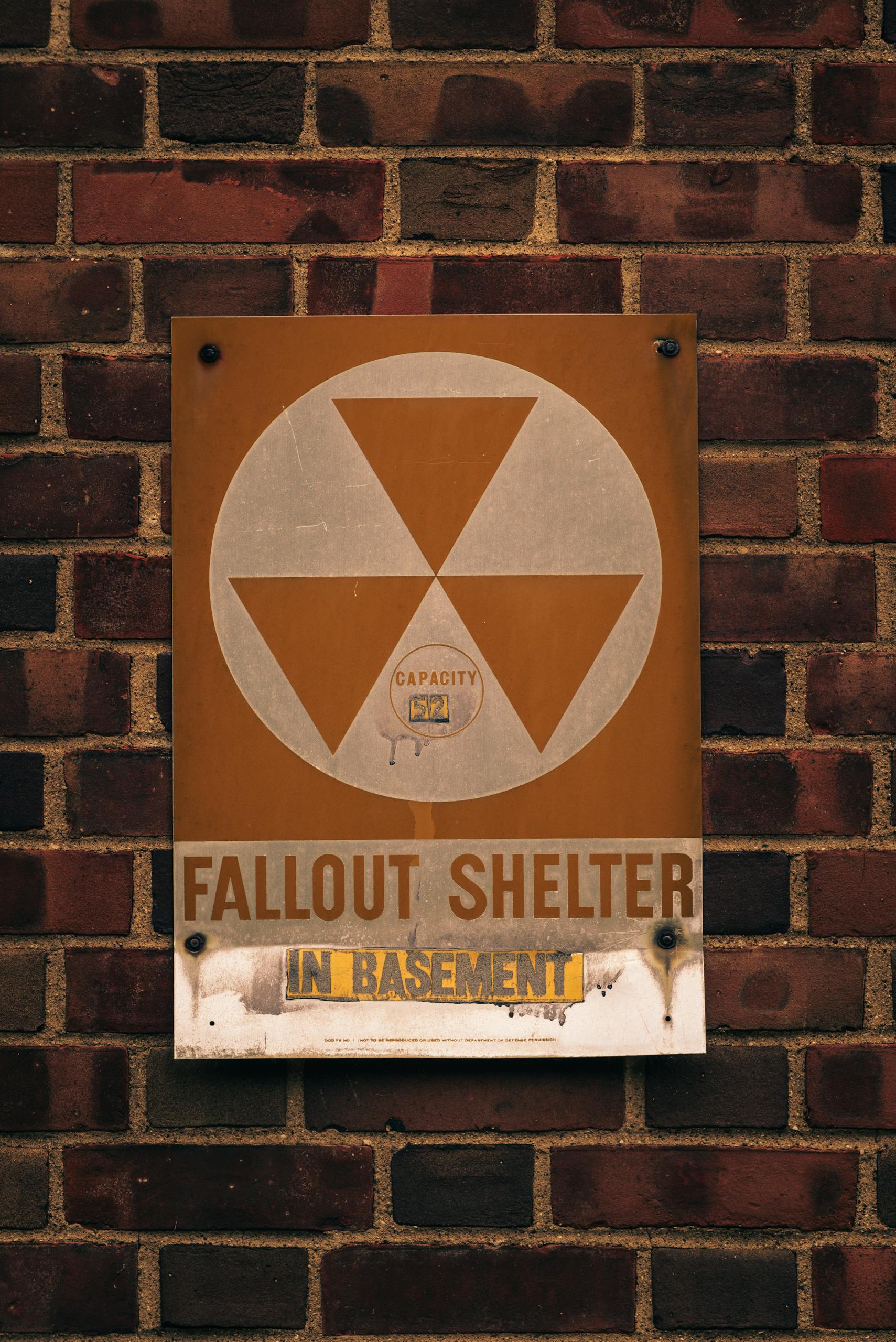
A list of the ‘safest places’.
In the face of a worst-case scenario, property experts have pinpointed locations that might provide relative safety.
The 20 locations, highlighted by property portal EMoov in 2017, sit safely outside the immediate blast zones of major British cities.
- Cornwall
- Weymouth
- Folkestone
- Dover
- Margate
- Clacton-on-Sea
- Felixstowe
- Brixworth
- Bideford
- Aberystwyth
- Skegness
- Isle of Anglesey
- Barrow-in-Furness
- Lancaster
- Whitby
- Carlisle
- Dumfries
- Berwick-upon-Tweed
- Inverness
That said, some of these areas may still be close enough to blast sites to be impacted by radiation carried on the wind, experts believe.
As a result, the remote island of Foula in the Shetland Isles could potentially be the safest place in the UK if the worst were to happen.